



How to Propagate Indoor Plants: A Step-by-Step Approach

Chosen theme: How to Propagate Indoor Plants: A Step-by-Step Approach. Welcome to a friendly, practical guide that turns one parent plant into many. Dive in, ask questions, and subscribe for weekly propagation tips and inspiring success stories.

Propagation Basics: Roots, Nodes, and Timing

Always begin with a vigorous, pest-free plant displaying strong, blemish-free leaves and steady new growth. Avoid stressed, flowering, or recently repotted specimens. Share a photo of your candidate plant in the comments for encouraging feedback.

Propagation Basics: Roots, Nodes, and Timing

Nodes are tiny power stations where leaves, buds, and aerial roots emerge. Cut just below a node to concentrate energy for rooting. Notice bumps on pothos and philodendron stems. Ask us where yours are if unsure.

Essential Tools and Clean Techniques

Use isopropyl alcohol or a flame to sterilize scissors, knives, and pruners. Wipe surfaces and pots as well. Sterile tools reduce rot and disease. Comment with your favorite cleaning routine for quick pre-cut rituals.

Essential Tools and Clean Techniques

Water shows root growth clearly, soil builds stronger transitions, and sphagnum moss balances moisture with air. Pick based on your plant’s needs and your schedule. Ask below for a medium recommendation matching your lighting and habits.

Step-by-Step: Stem Cuttings Done Right

Take a four- to six-inch stem with at least one node and two leaves. Cut just below the node at an angle. Remove lower leaves to expose the node. Tell us which species you are trying today.
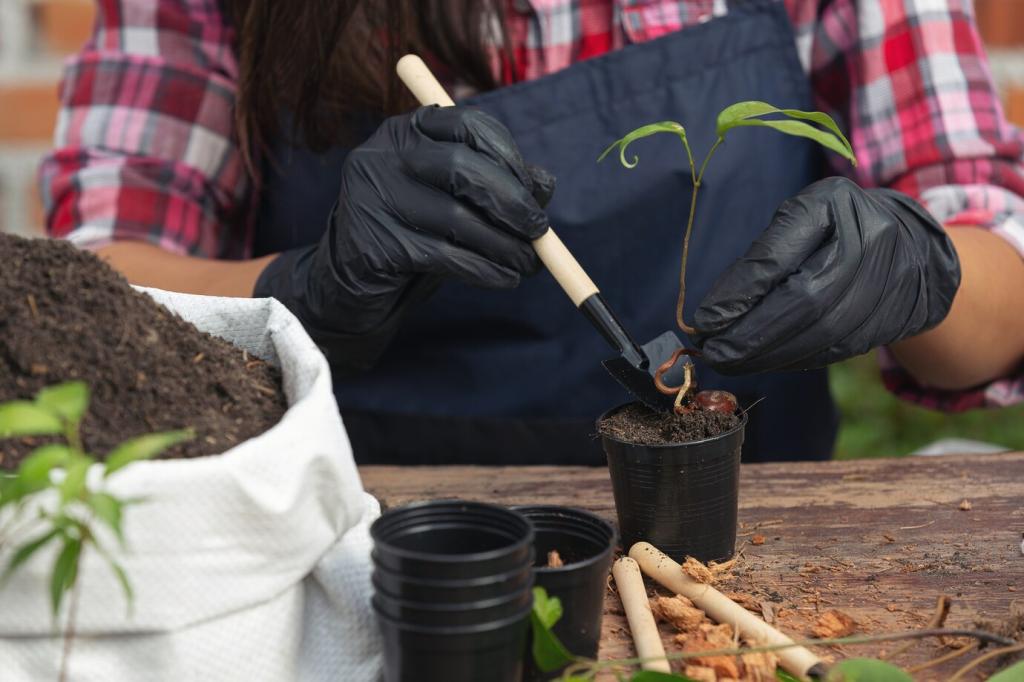
Place the node in water, moist moss, or a light potting mix. Keep leaves above the surface. Add a support stick if stems flop. Share your container choices; recycled jars and clear cups often work beautifully.
Check moisture, not constantly, just consistently. Refresh water weekly, or mist moss lightly. Provide bright, indirect light and gentle airflow. Post weekly photos to track progress and celebrate tiny root nubs together.

Leaf, Division, and Offset Methods

Let succulent leaves callus for a day or two, then place on lightly moist mix. For begonias, leaf sections with vein intersections root well. Share your propagation trays, and we will cheer each tiny rosette along.

Leaf, Division, and Offset Methods

Water the parent plant beforehand, then gently loosen roots and separate natural sections. Keep several roots per division. Repot firmly but not tightly. Comment with plant names you plan to divide for individualized spacing advice.

Aftercare: From Tiny Roots to Thriving Plants

Gradually transition rooted cuttings to brighter conditions over several days. Watch for curling, bleaching, or drooping. Adjust distance from the window. Share your light setup, and we will suggest thoughtful tweaks for steadier growth.

Aftercare: From Tiny Roots to Thriving Plants

Once roots reach two to three inches, move cuttings to a breathable mix and appropriately sized pot. Begin diluted fertilizer after new top growth appears. Report your timeline so others can compare their milestones and learn.

This is the heading

Lorem ipsum dolor sit amet, consectetur adipiscing elit. Ut elit tellus, luctus nec ullamcorper mattis, pulvinar dapibus leo.

This is the heading

Lorem ipsum dolor sit amet, consectetur adipiscing elit. Ut elit tellus, luctus nec ullamcorper mattis, pulvinar dapibus leo.

Blissbuyershop
Privacy Overview

This website uses cookies so that we can provide you with the best user experience possible. Cookie information is stored in your browser and performs functions such as recognising you when you return to our website and helping our team to understand which sections of the website you find most interesting and useful.